Imran Akbar’s thoughts on life at Stanford and beyond

Burning a Hole in Fire

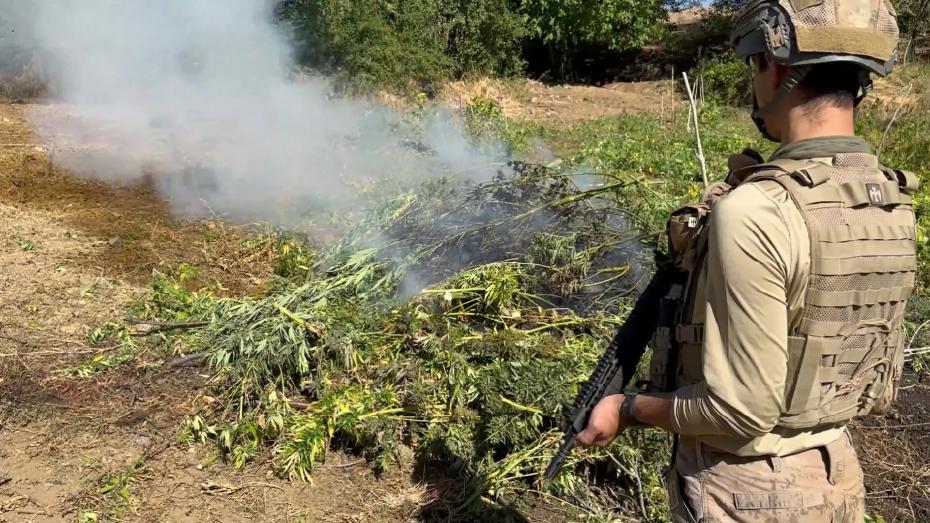
a great analogy from the chairman of Oaktree Capital got me thinking about forest fires:

“the Los Angeles Times kicked off a major series on forest fires.  Here’s part of what it said:

The government’s long campaign to tame wildfires has, perversely, made the problem worse. . . .  By stamping out most wildland blazes as quickly as possible, the Forest Service has stymied nature’s housekeeping – the frequent, well-behaved fires that once cleaned up the pine forests of the Sierra Nevada and the Southwest.  Now, woodlands are tangled with thick growth and dead branches.  When fires break out, they often explode.

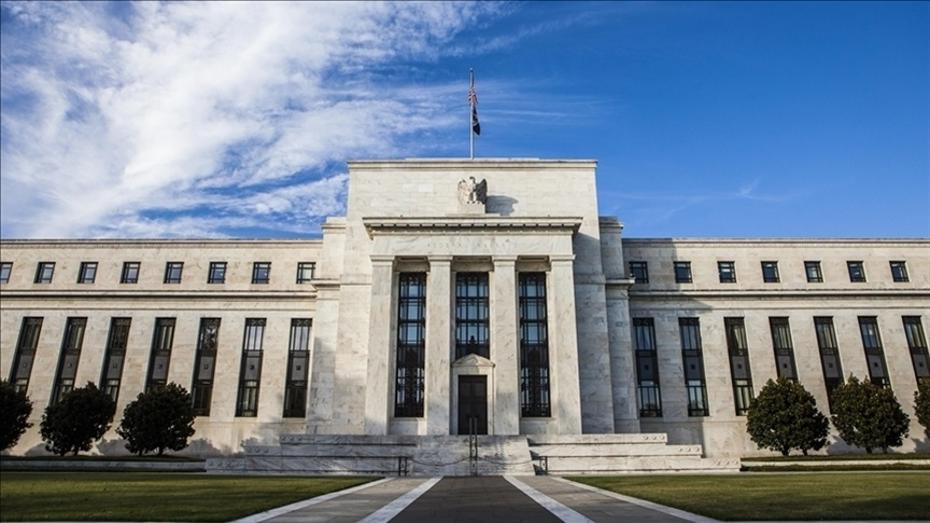
Sound familiar?  Clearly, the analogy between financial crises and forest fires is solid.  And I told Tom that just as the Fed’s growing tendency to solve every problem led people to take greater risks, the policy of fighting fires early also created moral hazard by encouraging people to build homes further into the forest.  It fell to the community to keep those unwisely built structures safe, just as the government now feels it has to rescue subprime borrowers and financial institutions.

Capitalism can produce great results, but participants have to be allowed to both win and lose.”

which reminded me not only of risk homeostasis, but a fascinating portion of the book Young Men and Fire, about the 1949 Mann Gulch fire which claimed the lives of 13 smoke jumpers, where he describes what the other fire fighters saw their leader doing as they tried to escape being engulfed by flames:

“I saw him bend over and light a fire with a match.  With the fire almost on our back, what the hell is the boss doing lightning another fire in front of us?  We thought he must have gone nuts… what is this dumb bastard doing?… saw the foreman enter his own fire and lie down in its hot ashes to let the main fire pass over him… Dodge instantly invented what was to become known as the ‘escape fire‘ by lighting a batch of bunch grass with a gofer match… in so doing, he started an argument that would remain hot long after the fire.

Traditionally set by plains Indians to escape from grass fires and that pioneers on the plains picked up invention from Indians - start one in the immediate vicinity of person or company in peril… at first small and harmless, the fire will soon burn over an area large enough to form a safe asylum, and when the sweeping cohorts of flame came bearing down upon the apparently doomed company, the mighty line would part as if by pre-ararngement and pass harmlessly by on either side.

His invention, taking as much guts as logic, suffered the immediate fate of most other inventions - it was thought to be crazy by those who first saw it… who kept going, most to their deaths.”

Comments

Formula 1 pit-stop

someone filmed a pit-stop with an infrared camera; from the ’streaks’ the tires leave behind as the driver pulls away, I’m guessing they’re either pre-heated, or weren’t replaced (which would be unusual)…

from the 2008 race in Turkey, courtesy F1.com
they don’t show races on the tele here (not that I have one), but you can find them a few days later here.

Comments

the Man in the Middle

not a variation of “the man in the arena,” but a term from the world of cryptography.  It’s the technique British magician Derren Brown used while playing 9 others in games of chess, to come out on top.  This is the video of the performance:

Not that’s impossible to do so without trickery - this is an old picture of the late Bobby Fischer:

Chess War on 12 Fronts

the example I remember of the man-in-the-middle attack is that of the South African air force.  Each airplane has a transponder on it that’s used to identify-friend-or-foe - yet an enemy side can impersonate them by intercepting the signal, relaying it to another South African station, recording their response, and replaying it to the airplane.

Comments

Steve Squyres talk

Prof. Steve Squyres from Cornell delivered an awe-inspiring lecture a few months ago about his work on the NASA Mars rovers, and later signed his book for the audience.

Get the Flash Player to see this player

or download the MP3 here.

It was cool how he made a point of answering questions from children in the audience first - a true successor to Carl Sagan. I wanted to ask him how they navigate if there is no GPS system on Mars - it seems like this is the answer, which would have to be supplemented with visual calibration of some sort.  As Mars has days shorter than here on Earth, every team member had specially-designed watches made that would run on Mars time, bringing them into work half an hour earlier every day!

You can download and play around with the software that the engineers at NASA use to control the rovers, using real data.  You can fly around Mars as well, using digital elevation data with software like this or this.  Astronomy is becoming more accessible now thanks to Microsoft’s WorldWide Telescope and Google Sky.

Most of the deep-space probes actually only send data using a single radio sideband in order to save power, and are received through the Deep Space Network (I visited the Goldstone site in the Mojave desert outside L.A. a few years ago, which is actually situated on the live-fire Ft. Irwin military base).

Here are some of the pictures/videos from his slide deck:

sunset on Mars:

dusty solar panels:

purgatory dune (video of the wheels burning rubber here)

the landing site:

soil test:

parachute testing in the wind tunnel at Moffett Field (they have great tours)

Mars rover petals unfolding

wheels burning rubber

dust devils on Mars:

the Mars 2020 video referred to in the Q&A session is here.

Comments

Learning from the Masters

at the Louvre in Paris:louvre.jpg

Comments